Making
From a slab of clay to candlelight in the windows.
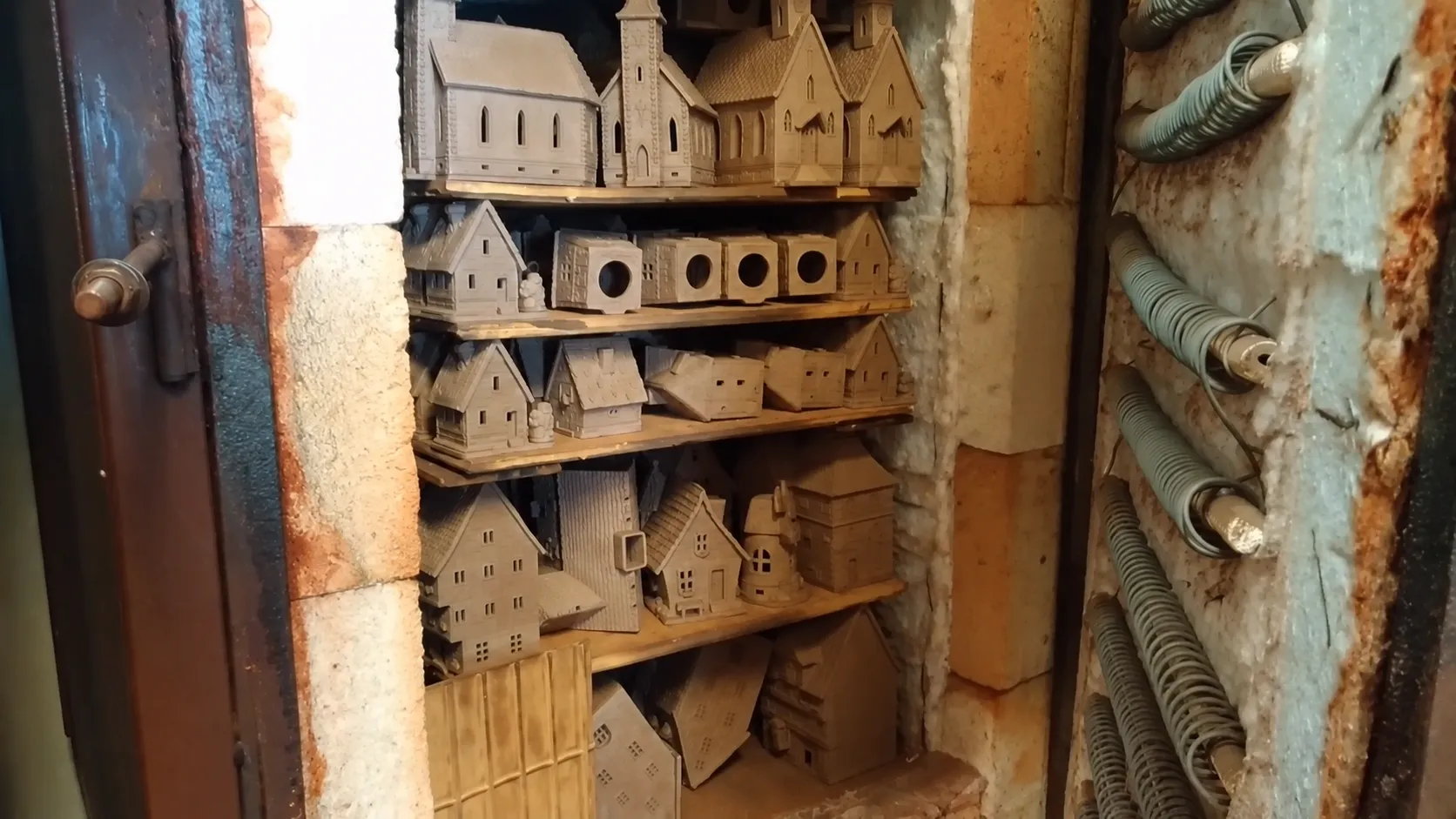
Every VILIUS house is made by hand in our workshop in Lithuania. There is no casting line: each wall is cut and each window carved individually.
A new model can take weeks from drawing to the first fired piece. Repeating the same house does not make the work faster — only more precise.
How one house is made
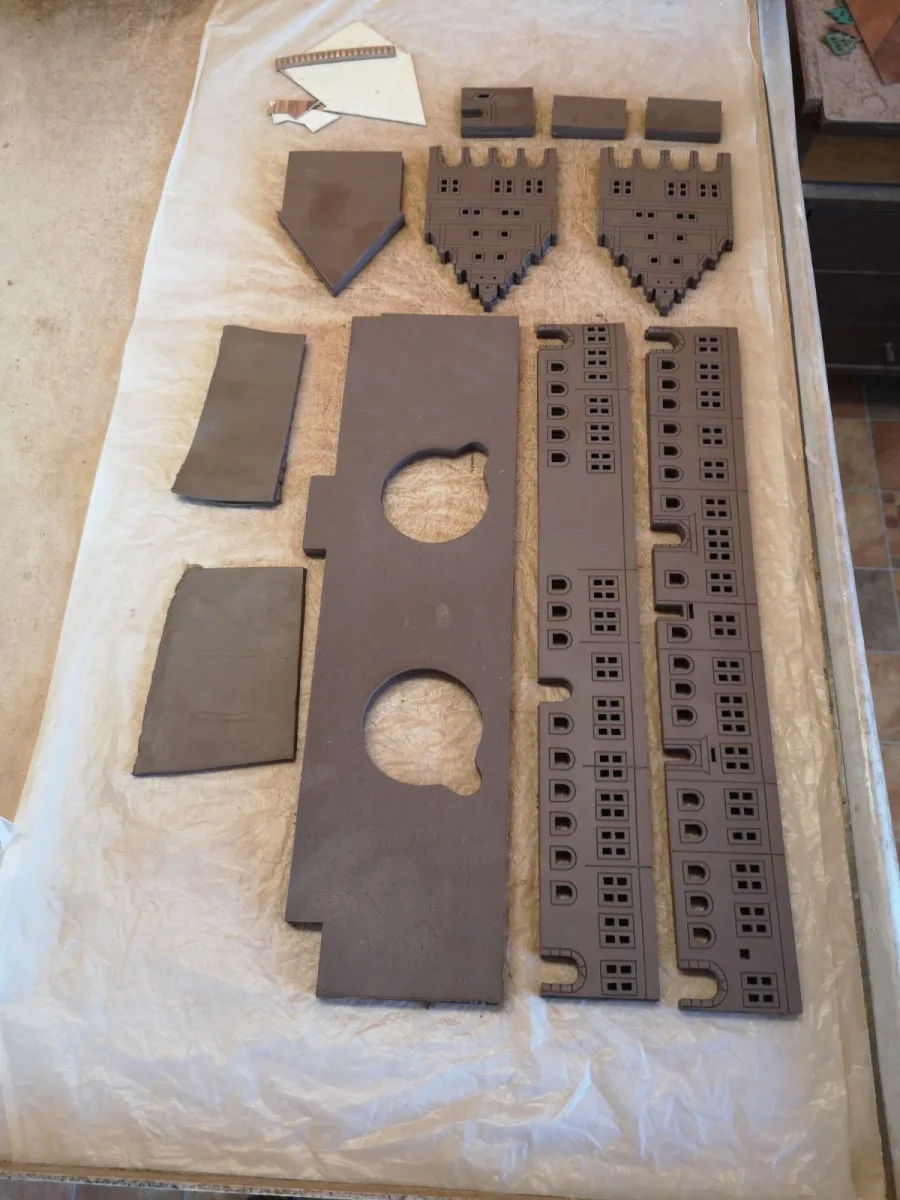
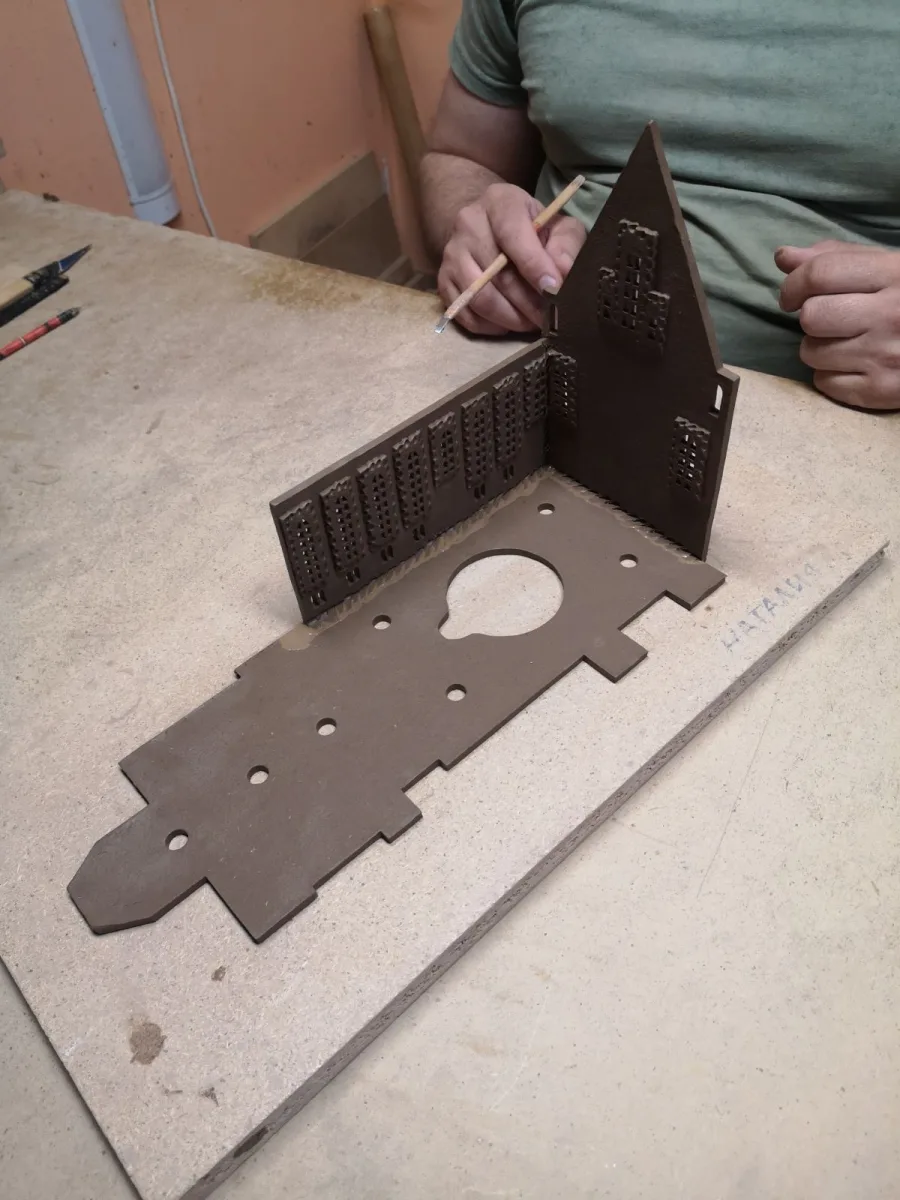
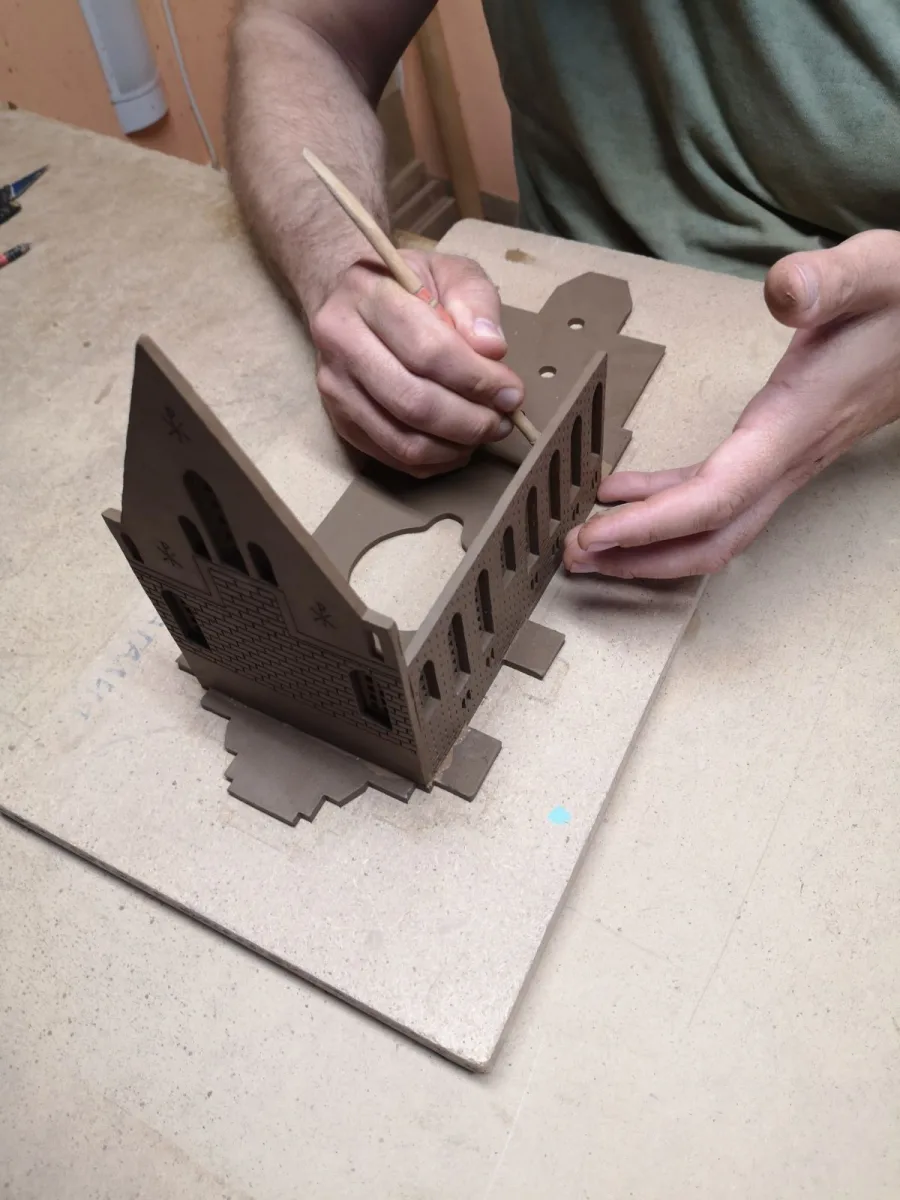
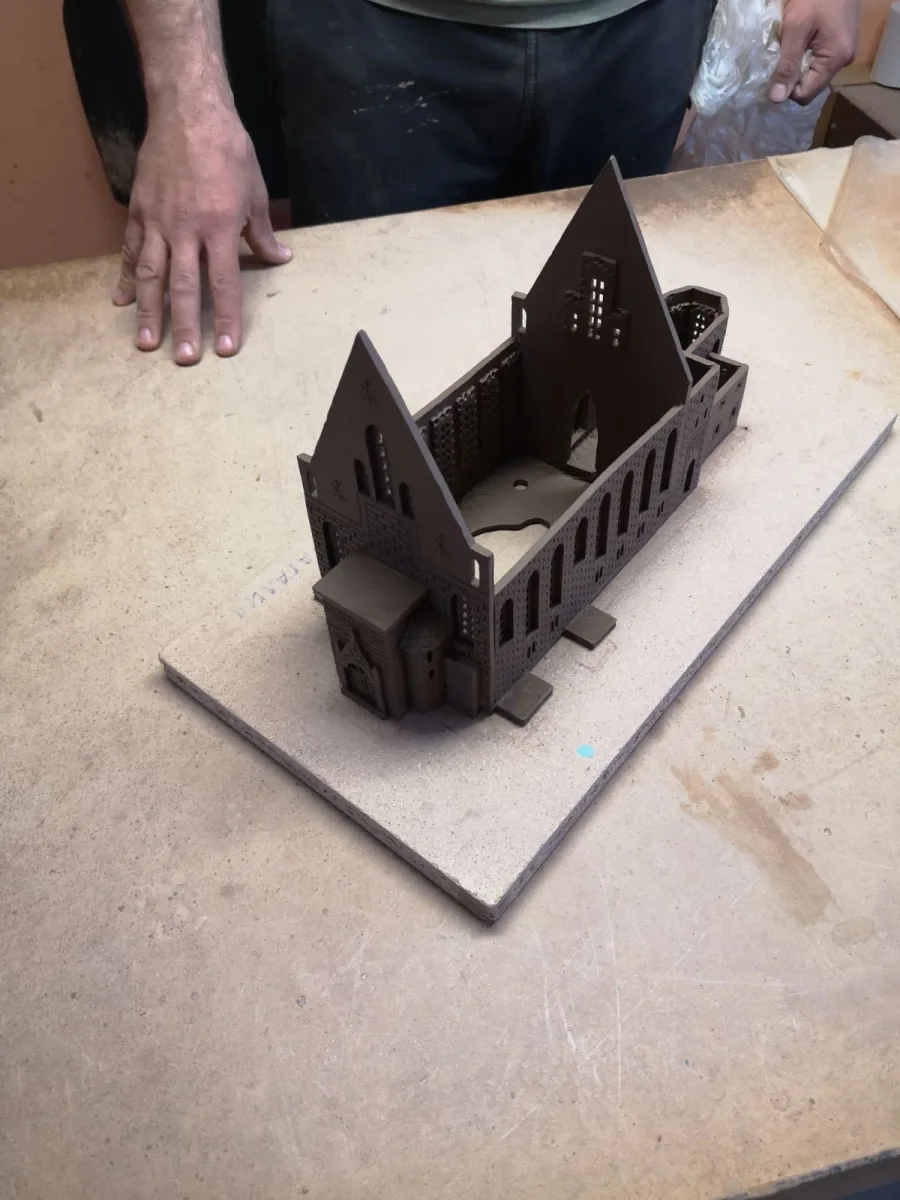
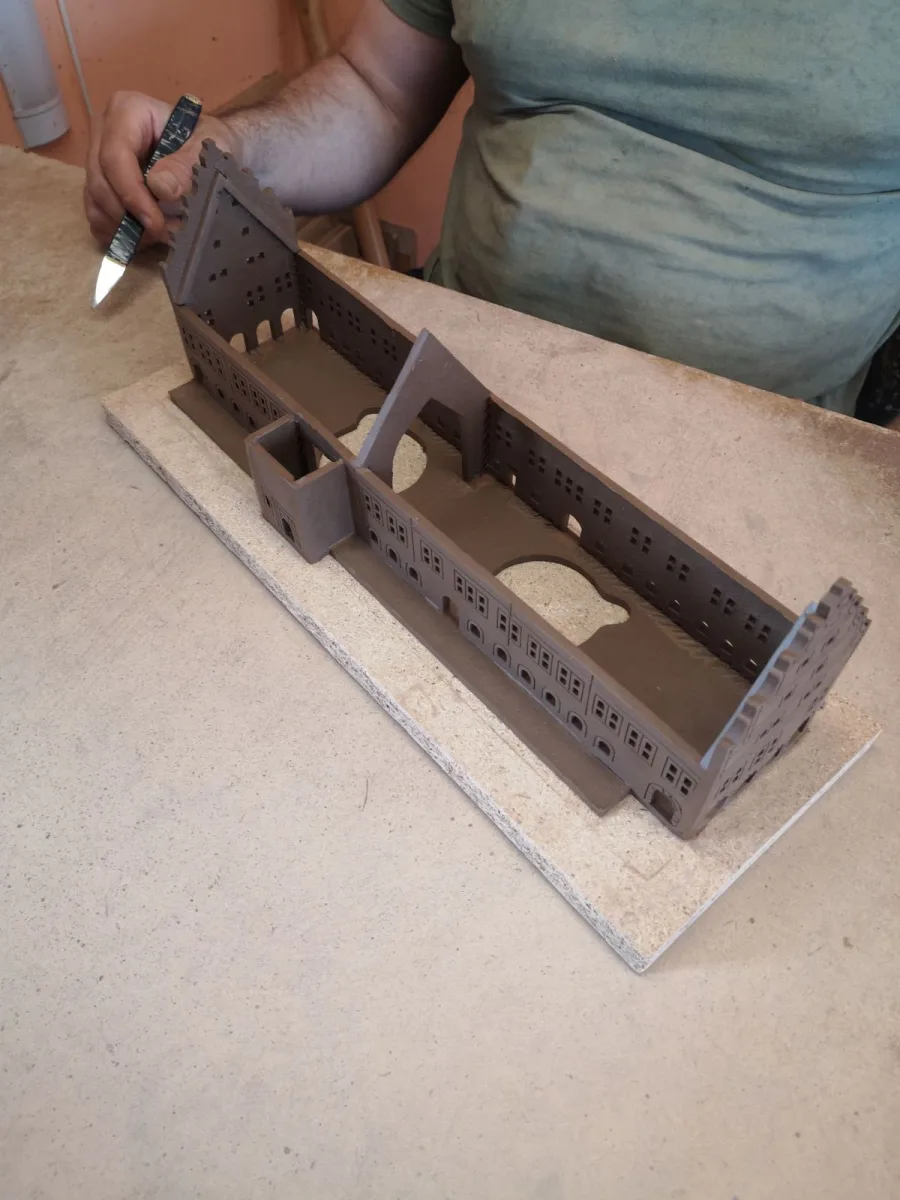
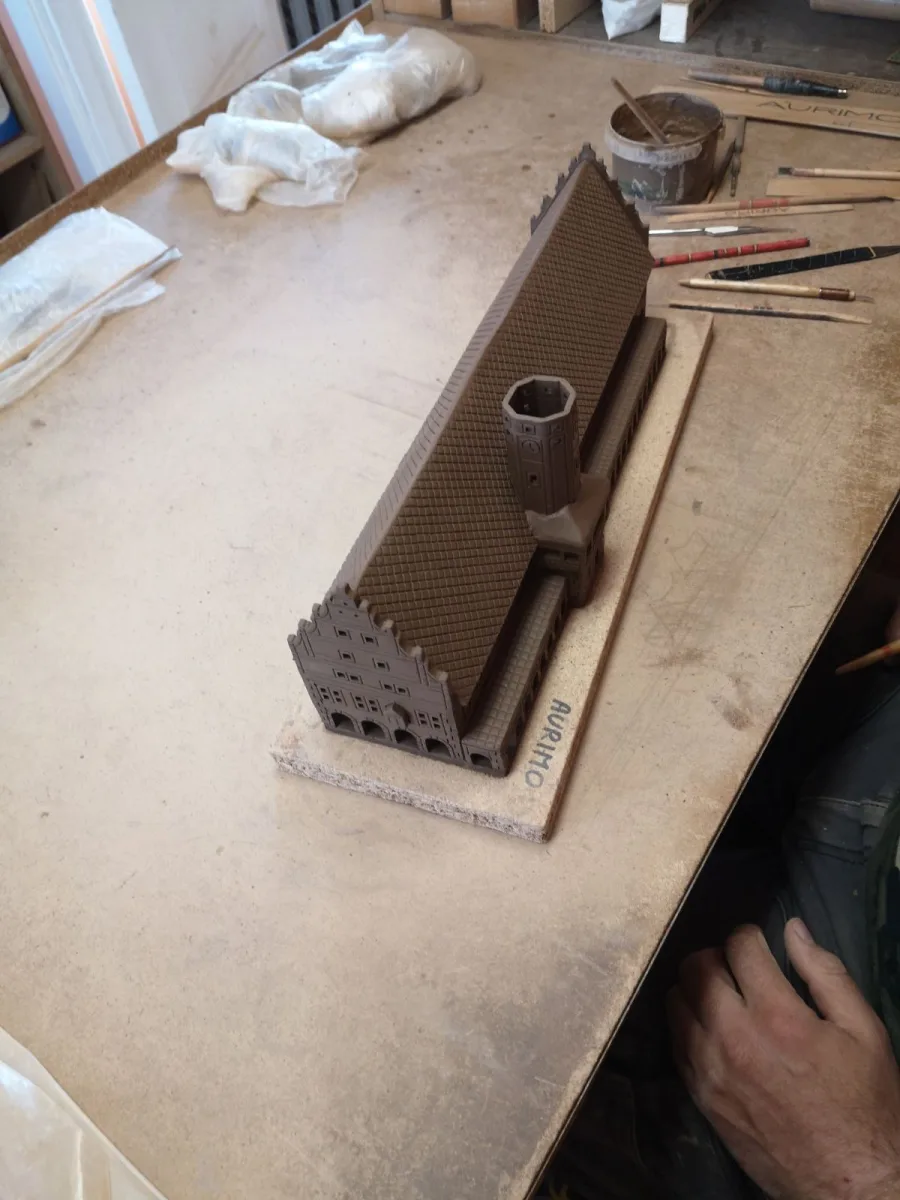
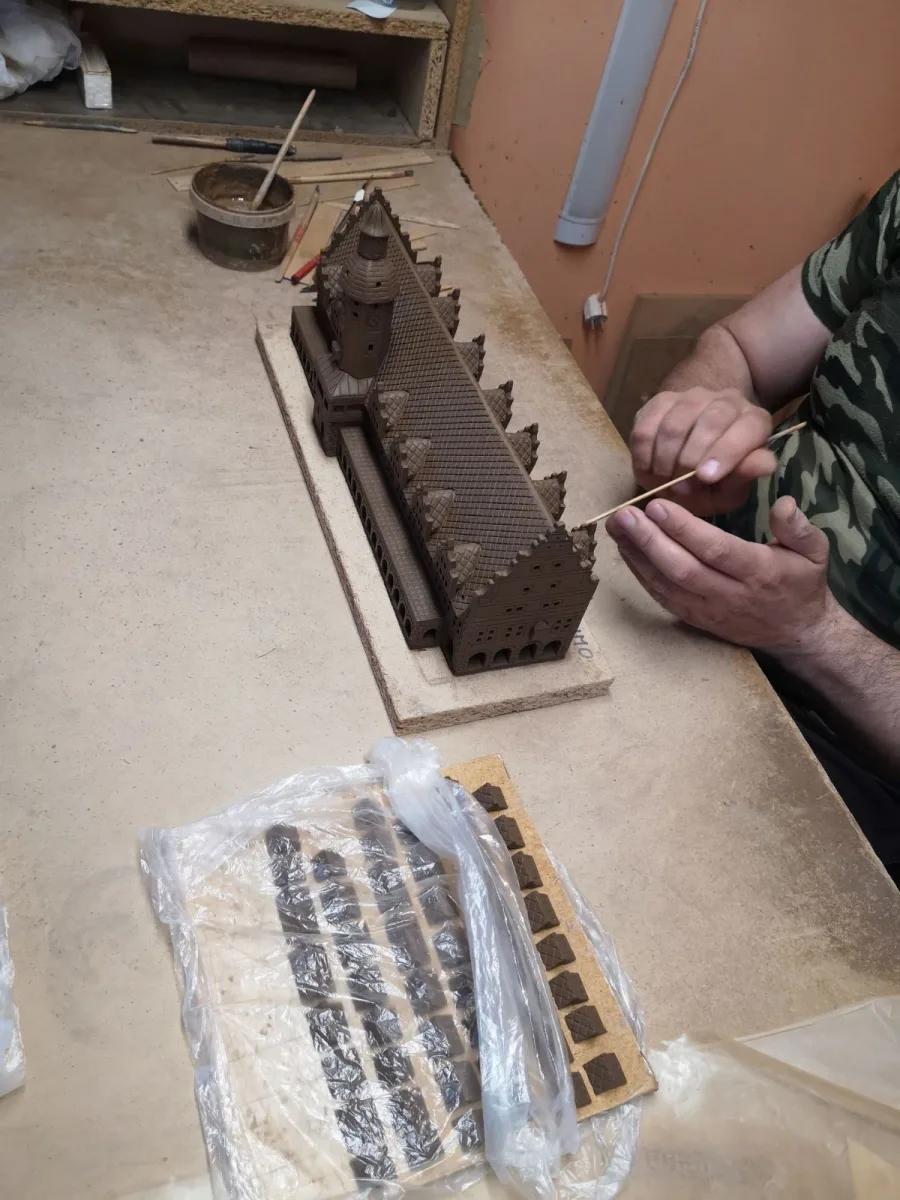
01 / 09
01
Measurements
The building is measured from photographs and drawings, and its proportions are translated to the scale of the model.
02
The clay slab
Lithuanian clay is rolled into an even slab — the future wall of the house.
03
Cutting the facade
Each wall is cut separately; windows, doors and brick courses are carved by hand.
04
Assembling the walls
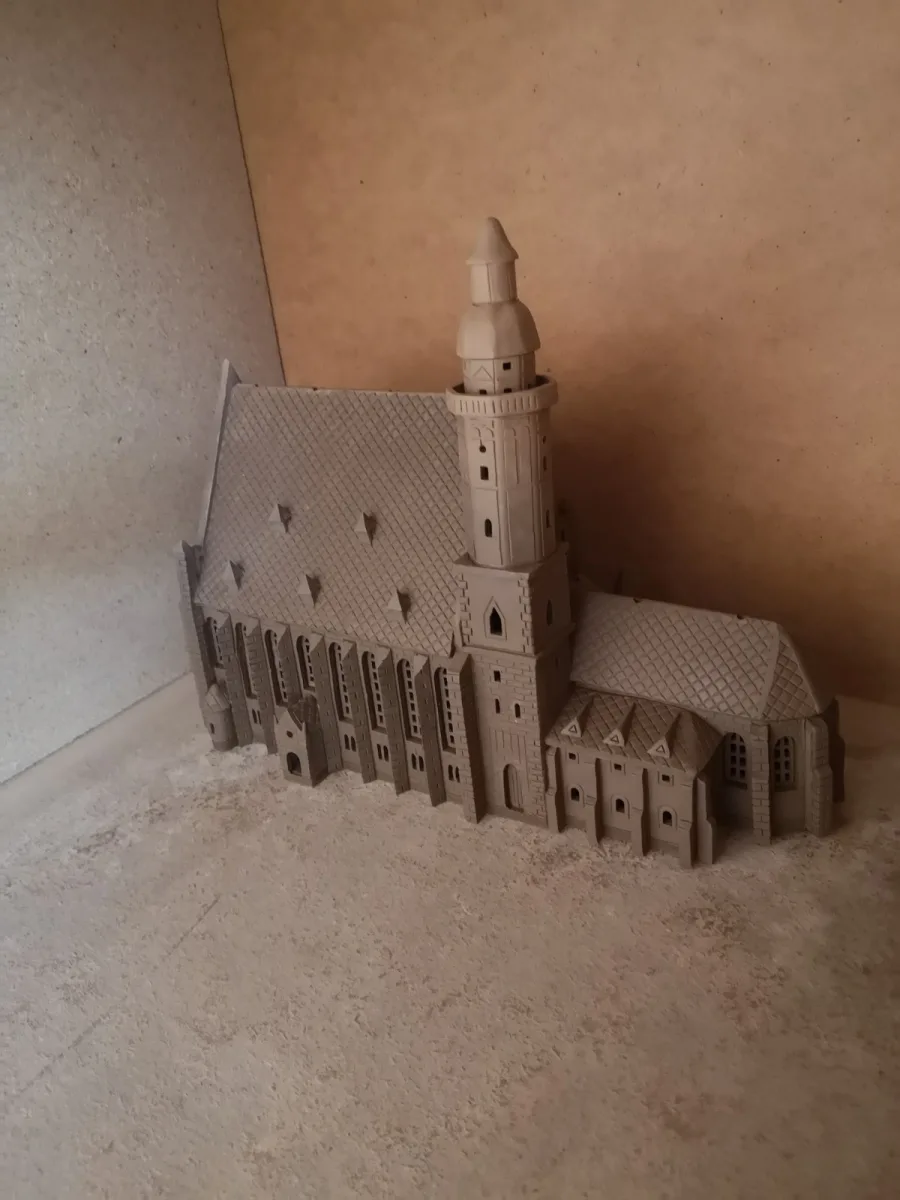
The walls are joined and smoothed while the clay still accepts the form.
05
Roof and details
Tiles are made row by row, then chimneys, cornices and small details are added.
06
Drying
The house dries slowly on a shelf — haste at this point ends in cracks.
07
Firing
The kiln is brought to around 1000 °C. Clay becomes ceramic.
08
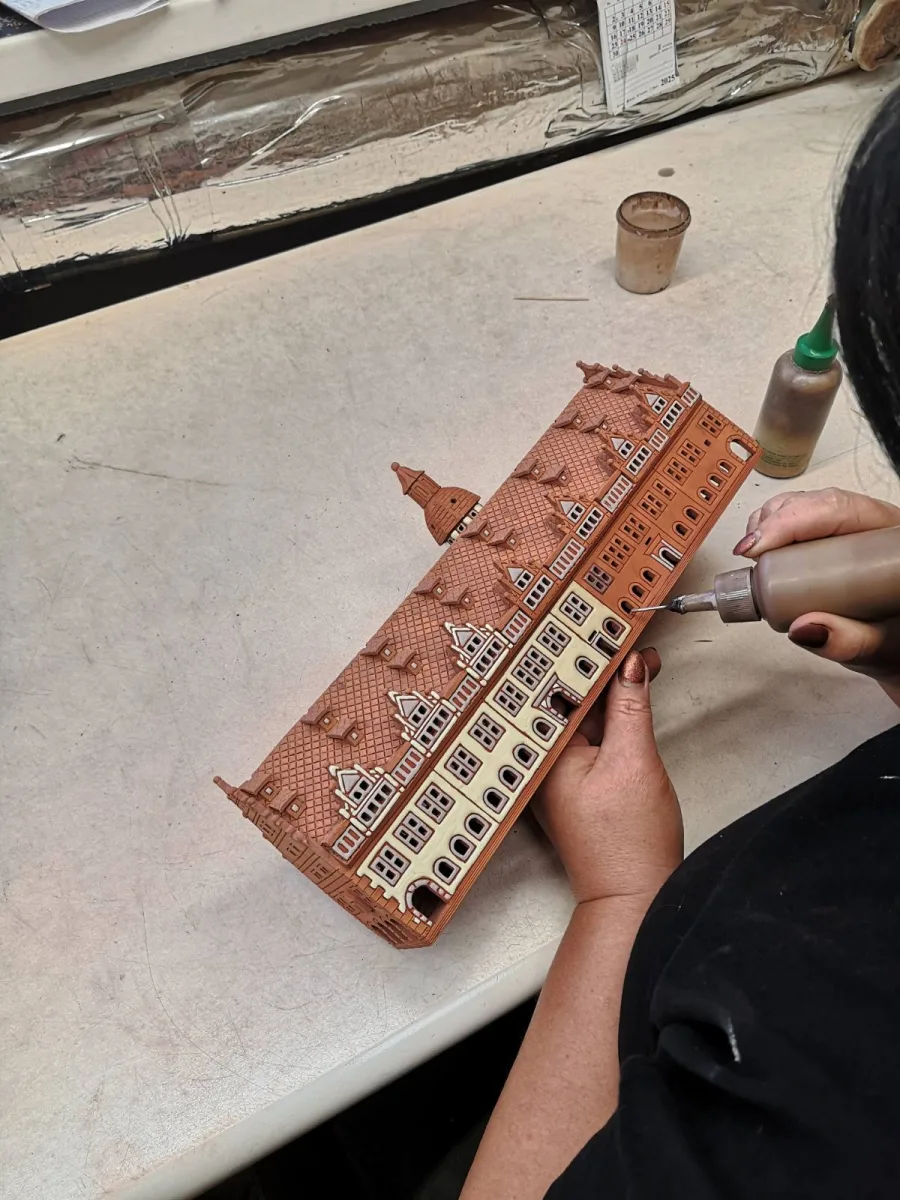
Glazing and finishing
The facade is painted and glazed by hand, then fired a second time.
09
The finished model
The fired and coloured house is prepared for a candle — only then does it begin to glow.
Materials and process
- Clay
- Lithuanian clay, rolled into slabs of even thickness.
- Tools
- Knives, stamps and hands — no industrial moulds.
- Firing
- Two firings in the kiln, peaking at around 1000 °C.
- Colour
- Engobes and glazes applied by hand, layer after layer.
That is why every house carries small differences. They are not flaws — they are the evidence of a person.